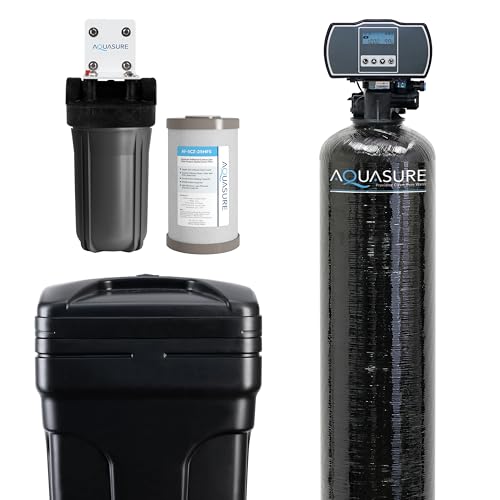
Water softeners
An ion-exchange unit plumbed into the rising main that removes calcium and magnesium entirely, giving genuinely soft water throughout the property.
A water softener is the only product on this site that actually removes hardness. Everything else either reduces the damage scale does or changes how it forms. A softener swaps the calcium and magnesium ions for sodium ions, and what comes out the other side is soft water by any measure.
The effects are immediate and obvious in a hard water area. No scale in the kettle, no white marks on the shower screen, dramatically less soap and detergent needed, and — the reason most people eventually buy one — no scale building up inside the boiler and hot water cylinder.
It is the biggest commitment in domestic water treatment. The unit needs space, a drain connection, a power supply on most models, and a regular supply of salt. In a very hard water area it typically pays back over several years in reduced descaling, longer appliance life and less detergent. In Scotland or Cornwall it would be money thrown away.
Best for
- Hard and very hard water areas, above roughly 200 mg/l CaCO₃
- Protecting a combi boiler or hot water cylinder from scale
- Households already spending real money on descaling
- Anyone with skin conditions aggravated by hard water
- Properties where appliances keep failing early
Essential in commercial kitchens, laundries and anywhere with steam equipment in a hard water area. Sizing is a professional calculation, not a guess.
Pros and cons
Pros
- Genuinely removes hardness rather than managing its effects
- Noticeably less soap, shampoo and detergent needed
- Protects boiler, cylinder and every water-using appliance
- No more descaling anything
Cons
- Expensive to buy and to install
- Needs space, a drain, and usually a power socket
- Ongoing salt cost and the job of carrying it
- Softened water is not recommended for drinking in quantity — keep one hard tap
- Pointless in a soft water area
Can you install it yourself?
Get a plumber for this one
Skill level: Advanced · Time: about 5 hours
A softener installation cuts into the rising main, needs a bypass so the property still has water when the unit is serviced, requires a drain connection made with the correct air gap to prevent backflow, and must leave at least one unsoftened drinking tap. Backflow protection is a Water Supply (Water Fittings) Regulations 1999 matter, and getting it wrong risks contaminating the mains — which is why this is WaterSafe-approved plumber work and nothing else.
Tools you will need
- Full plumbing kit
- Drain connection materials
- Bypass valve assembly
Call a plumber if
- Always
Maintenance
Top up salt roughly monthly depending on hardness and household size. Service annually. Clean the brine tank every few years.
What installation costs
£400–£900 indicative UK labour
Labour only, and highly dependent on where the unit goes relative to the stopcock and the nearest drain. A garage installation next to the main is at the low end; a kitchen unit needing a long drain run is not.