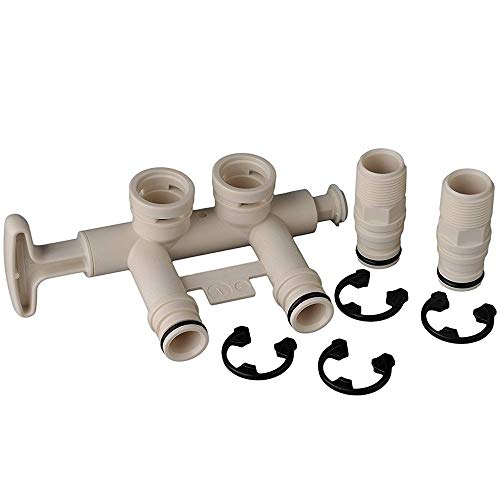
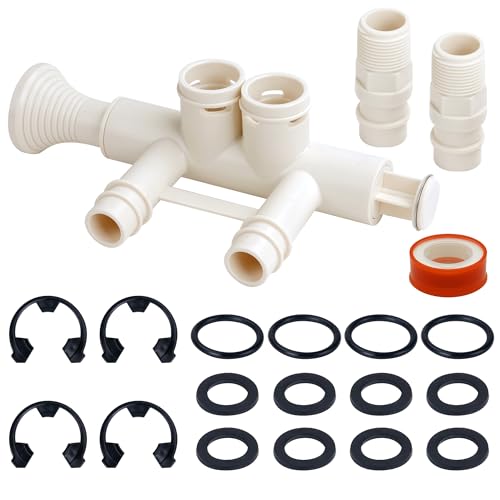
Bypass kits
A valve arrangement that routes water around a softener or filter, so the property keeps its supply while the unit is serviced or removed.
A bypass is three valves in an arrangement that lets water either pass through the equipment or go around it. Open the bypass, close the two isolating valves, and the softener can be removed entirely while the house still has water.
On a water softener it is not optional. A softener will need servicing, will eventually need replacing, and may need taking out of circuit — if it develops a fault, if the property is sold to someone who does not want it, or if the drinking water needs to be unsoftened for a period. Without a bypass, every one of those means no water in the property until the job is finished.
Most softeners ship with an integral bypass built into the valve head. Where they do not, or where the installation is a filter rather than a softener, a bypass loop is built from standard fittings.
Best for
- Every water softener installation
- Whole-house filters on the rising main
- Any equipment that will need servicing in place
- Properties where losing the water supply is disruptive
Essential commercially, where a duty-standby arrangement often goes in as well so the premises never runs without treatment.
Pros and cons
Pros
- Service or remove the unit without losing the water supply
- Lets you compare treated and untreated water directly
- Makes the installation reversible
- Cheap at installation, expensive to retrofit
Cons
- Three more joints on the rising main
- Takes additional space around the unit
- Valves left unused for years can seize
Can you install it yourself?
Get a plumber for this one
Skill level: Advanced · Time: about 2 hours
A bypass sits on the incoming main by definition, which puts it in the same category as any other rising main work: get it wrong and there is no clean way to stop what happens next.
Tools you will need
- Full plumbing kit
- Three valves
- Fittings and pipe
Call a plumber if
- Always — this is rising main work
Maintenance
Operate the valves annually to keep them free.
What installation costs
£100–£250 indicative UK labour
Labour only, and usually included in the softener installation price rather than charged separately.