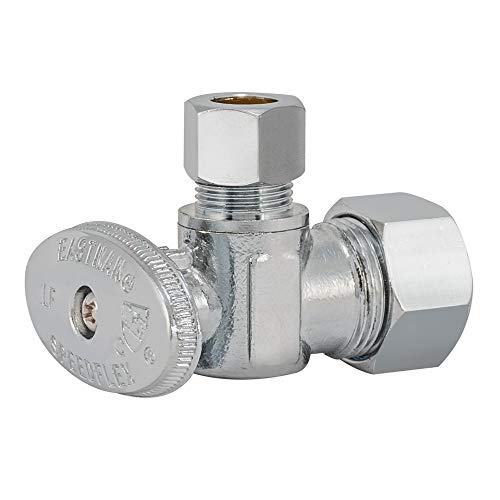
Isolation valves
Small in-line valves letting you shut off one appliance without turning off the water to the whole property.
An isolation valve is the cheapest insurance in plumbing. It is a small valve, usually operated with a screwdriver or a quarter-turn lever, fitted in a line so that one branch can be shut off on its own.
For water filtration this matters twice. First at installation, because a valve on the feed is what lets you make the connection without draining the property. Second at every cartridge change afterwards, because without one you are shutting off the whole house every six months.
Fit them either side of any filter housing. It costs very little at installation and it turns a fifteen-minute cartridge change into a fifteen-minute cartridge change forever, rather than a half-hour job involving the stopcock.
Best for
- Either side of any filter housing
- On the feed to a filter tap or fridge line
- Anywhere you will need to service equipment
- Retrofitting where a previous installer left none
Standard practice, and on commercial installations a bypass loop usually goes in as well.
Pros and cons
Pros
- Very cheap
- Turns future servicing into a small job
- Contains a leak to one appliance
- Available in push-fit, compression and lever forms
Cons
- Screwdriver-slot valves seize if never operated
- One more joint, and every joint is a potential leak
- Cheap ones can weep at the spindle over time
Can you install it yourself?
Yes, this is a realistic DIY job
Skill level: Moderate · Time: about 30 minutes
Isolate upstream, cut the pipe, fit the valve, check for leaks under pressure. Prefer lever-handled valves over screwdriver-slot ones — you can see at a glance whether they are open, and they are far less likely to seize.
Tools you will need
- Pipe cutter
- Adjustable spanner for compression types
- Towels
Call a plumber if
- It is going into the rising main or old pipework
Maintenance
Operate them once a year so they do not seize.
What installation costs
£60–£120 indicative UK labour
Labour only, usually done as part of a larger job rather than on its own.