UV water treatment
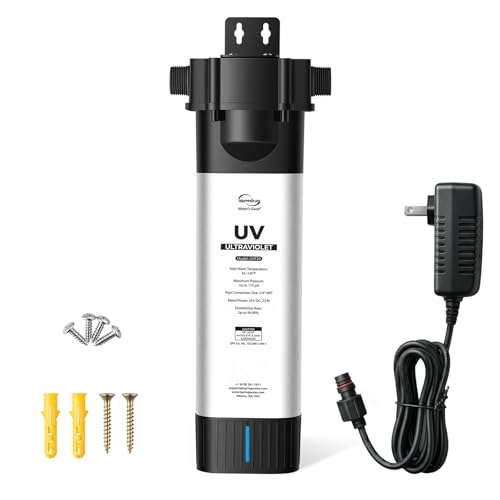
An ultraviolet lamp in a chamber that inactivates bacteria, viruses and protozoa as water passes. Disinfection, not filtration.
UV treatment works by exposing water to ultraviolet light at a wavelength that damages the DNA of microorganisms, so they cannot reproduce. Nothing is added and nothing is removed — the water's chemistry is unchanged, and it does not affect taste, hardness or anything dissolved.
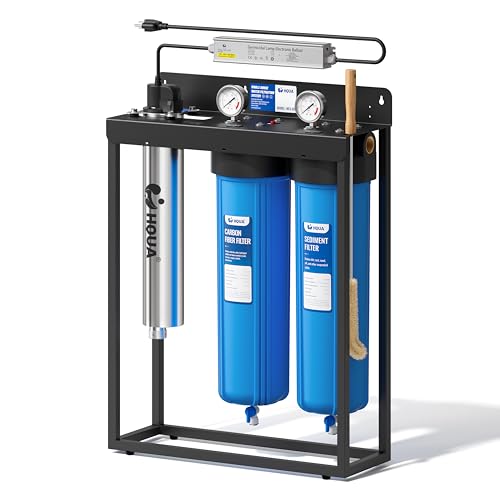
For that reason it is a disinfection stage rather than a filter, and it is almost always paired with filtration in front of it. UV needs clear water to work: particles shade microorganisms from the light, so a sediment filter upstream is not optional.
In the UK this matters mainly for private supplies. Households on mains water are already receiving disinfected water and do not need it. Properties on a well, spring or borehole very much do, and it is often the single most important piece of treatment they have.
Best for
- Private wells, springs and boreholes
- Any supply not disinfected by a water company
- Properties that have had a positive bacteriological test
- Belt-and-braces protection on a vulnerable supply
Common where a business is on a private supply, and often a condition of environmental health approval for food businesses.
Pros and cons
Pros
- Highly effective against bacteria, viruses and protozoa
- Adds no chemicals and changes nothing about taste
- Continuous, with no consumable other than the lamp
- Low running cost
Cons
- Needs clear water — sediment filtration in front is mandatory
- Removes nothing; chemistry is entirely unchanged
- Needs mains power, permanently on
- Lamp must be replaced annually even though it still lights
- No protection if the lamp fails unnoticed — fit an alarm
Can you install it yourself?
Get a plumber for this one
Skill level: Advanced · Time: about 3 hours
This is the stage protecting a household from waterborne illness, and it has to be correctly sized to the flow rate to deliver the necessary UV dose. An undersized unit passes water too fast to be disinfected, and there is no way to tell by looking. Sizing is a calculation, and it should be done by someone who does it regularly.
Tools you will need
- Plumbing kit
- Electrical supply
- Mounting brackets
Call a plumber if
- Always, and especially on a private supply where the whole point is microbiological safety
Maintenance
Replace the lamp every twelve months. Clean the quartz sleeve at the same time. Pre-filters as per their own schedule.
Replacement interval: roughly every 12 months, though volume matters more than time. More on cartridge intervals.
What installation costs
£300–£700 indicative UK labour
Labour only. Usually installed alongside pre-filtration as a package on a private supply.