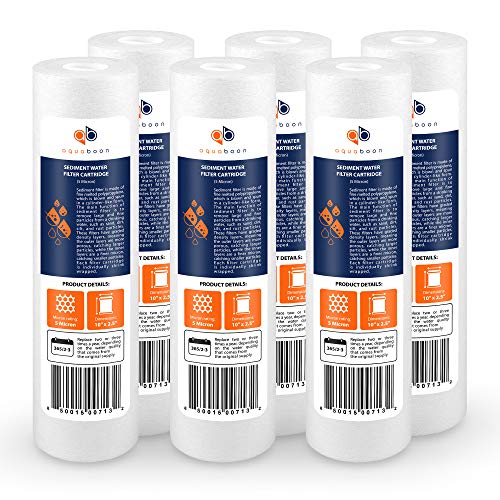
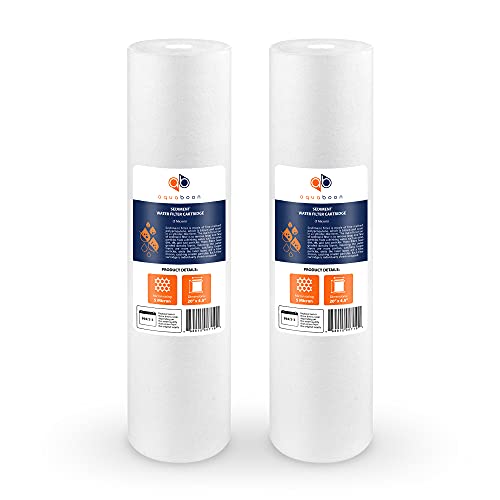
Sediment filters
A mechanical filter that strains out sand, silt, rust and other particles. Usually the first stage in any multi-stage system.
A sediment filter is a strainer, not a chemical treatment. It has a rated pore size — 50, 20, 5 or 1 micron are common — and it stops anything larger than that. Sand, silt, rust flakes from old iron mains, pipe scale dislodged by roadworks.
They are almost always the first stage of a larger system, and the reason is economic: sediment ruins carbon cartridges and destroys RO membranes, both of which cost far more than a sediment cartridge does. Putting a cheap consumable in front to protect an expensive one is the whole idea.
On its own, a sediment filter does nothing for taste, chlorine, hardness or anything dissolved. If your water looks fine but tastes of chlorine, this is not the product you need.
Best for
- Visible particles, cloudiness or grit in the supply
- Protecting an RO membrane or carbon stage
- Private wells and boreholes
- Properties on old iron mains
- After mains work in the street has stirred things up
Standard pre-treatment ahead of any commercial filtration or softening plant.
Pros and cons
Pros
- Cheap, and protects much more expensive stages
- Immediately visible effect where there is real sediment
- Washable pleated versions can be reused several times
- Available in a wide range of micron ratings
Cons
- Does nothing for taste, chlorine or anything dissolved
- Clogs faster than any other stage where the water is dirty
- Too fine a rating restricts flow noticeably
Can you install it yourself?
Yes, this is a realistic DIY job
Skill level: Moderate · Time: about 1.5 hours
Fitting the housing on an accessible branch line is within reach of a competent DIYer. Cutting into the incoming main is not — see whole-house filters.
Tools you will need
- Filter housing and bracket
- Pipe cutter
- Isolation valves
- Housing spanner
- PTFE tape
Call a plumber if
- It is going on the rising main rather than a branch — that is whole-house work
Maintenance
Three to six months, but genuinely driven by how dirty the supply is rather than by the calendar.
Replacement interval: roughly every 4 months, though volume matters more than time. More on cartridge intervals.
What installation costs
£120–£300 indicative UK labour
Labour only, on an accessible branch. Rising main installation costs more.