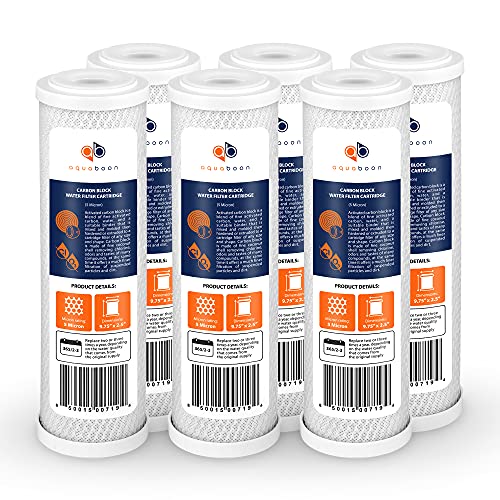
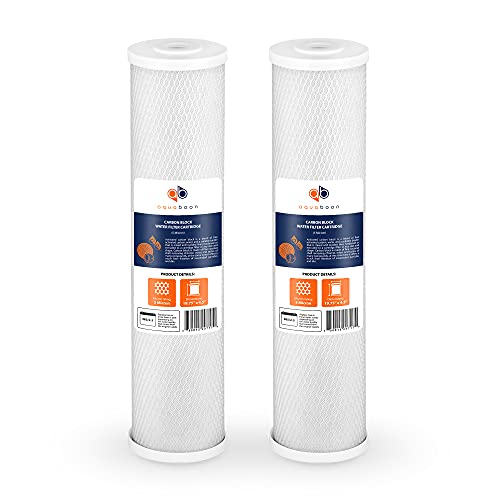
Carbon filters
Activated carbon cartridges that adsorb chlorine, organic compounds and the things that make water taste and smell wrong. The workhorse of domestic filtration.
Activated carbon is the most widely used filtration medium in domestic water treatment, and for a good reason: it is very effective at exactly the things people complain about. Chlorine, the chemistry that gives water a swimming-pool smell, organic compounds, and a range of other contaminants all adsorb onto its enormous internal surface area.
It comes in two forms. Granular activated carbon, which is loose granules and offers high flow with lower contact time. And carbon block, which is compressed into a solid and gives better contact and finer filtration, at some cost to flow rate. Block is generally the better performer for drinking water; granular suits higher-flow applications.
What carbon does not do is remove hardness, dissolved salts or nitrates. It is a taste-and-chlorine product, and marketing that implies otherwise is overstating it. For dissolved substances you need RO.
Best for
- Chlorine taste and smell
- Improving the taste of drinking water generally
- Second stage after sediment filtration
- Pre-treatment before an RO membrane
- The commonest single complaint about UK tap water
Standard in commercial coffee and drinks applications, where chlorine ruins the product.
Pros and cons
Pros
- Very effective on the complaints people actually have
- Inexpensive and universally available in standard sizes
- Carbon block versions also catch fine particulates
- No power, no waste water, no drain
Cons
- Does not reduce hardness at all
- Does not remove dissolved salts or nitrates
- Spent carbon can harbour bacteria if left in far too long
- Performance falls off gradually and without obvious warning
Can you install it yourself?
Yes, this is a realistic DIY job
Skill level: Easy · Time: about 15 minutes
Changing a cartridge in an existing housing is a fifteen-minute job. Isolate, unscrew, swap, grease the O-ring, screw back, flush through.
Tools you will need
- Housing spanner
- Bucket
- Food-safe silicone grease for the O-ring
Call a plumber if
- Only if the housing itself is being installed for the first time
Maintenance
Six months in domestic use, or by volume where the manufacturer gives a litre rating.
Replacement interval: roughly every 6 months, though volume matters more than time. More on cartridge intervals.