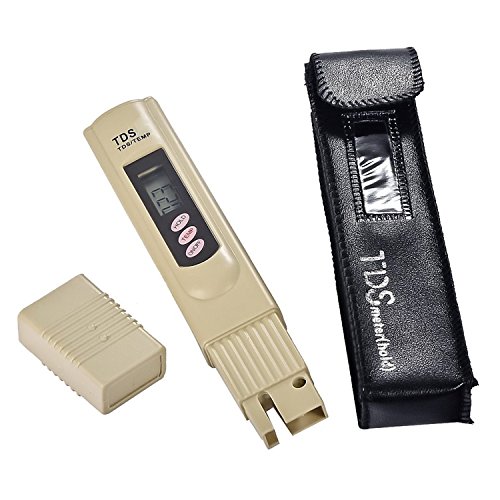
TDS meters
A pocket meter measuring total dissolved solids in parts per million. The standard way to check whether an RO membrane is still doing its job.
A TDS meter measures the electrical conductivity of water and converts it to an estimate of total dissolved solids in ppm. Dip it in, read the number. It takes seconds.
The most useful thing it does is monitor reverse osmosis. Compare the feed water reading with the reading from the RO tap: a healthy membrane rejects the great majority of dissolved solids, so the RO figure should be a small fraction of the feed. When that ratio starts creeping up, the membrane is going, and you know before the taste tells you.
It is important to be clear about what TDS is not. It is a single aggregate number covering everything dissolved, good and bad alike. Water high in beneficial minerals reads high. A low reading is not a safety certificate and a high one is not a warning — it is a trend indicator, and it is at its most useful when compared against itself over time.
Best for
- Monitoring RO membrane performance
- Comparing filtered against unfiltered water
- Deciding when a cartridge is exhausted
- Aquariums and specialist coffee
- General curiosity about your supply
Standard tool for anyone servicing RO or filtration equipment.
Pros and cons
Pros
- Inexpensive and instant
- The right tool for judging RO membrane health
- Pocket-sized, no consumables beyond a battery
- Makes cartridge replacement a measurement rather than a guess
Cons
- Measures everything dissolved without distinguishing between them
- Says nothing about bacteria, chlorine or specific contaminants
- Does not measure hardness — use a hardness kit for that
- Cheap meters drift and need occasional calibration
Can you install it yourself?
Yes, this is a realistic DIY job
Skill level: Easy · Time: about 2 minutes
Switch on, dip to the marked line, read. Rinse and dry afterwards.
Tools you will need
- Nothing
Maintenance
N/A